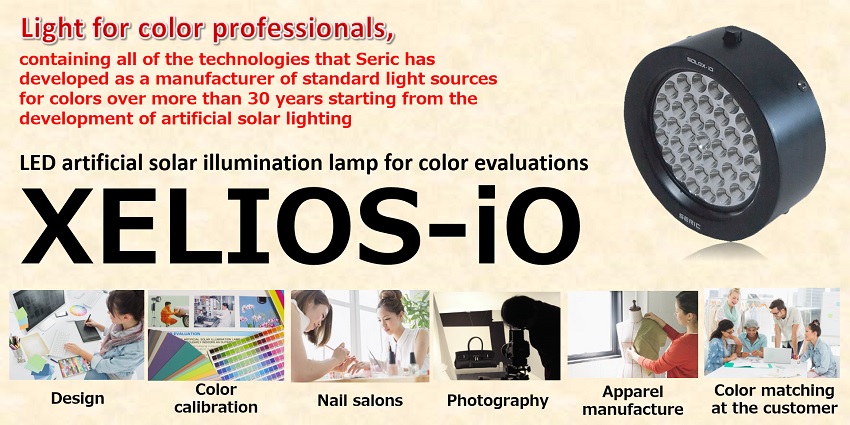
Portable LED Artificial Solar Lighting
XELIOS-iO is SERIC's portable LED artificial solar lighting for accurate color evaluation. Drawing on SERIC's experience in developing artificial solar lighting, XELIOS-iO brings daylight-like illumination to the places where colors are evaluated—from individual workstations to meeting rooms and customer offices.
With tabletop and cordless hand-held configurations, XELIOS-iO supports product development, design reviews, color matching, and conversations with customers. The series includes 5500K and 6500K color-temperature options, with specifications available for different markets.
Color appearance changes under different light sources because each source has its own spectral distribution. Ordinary indoor lighting can also change as lamps age, making it difficult to use the same color reference consistently at a desk, in a conference room, or at a customer site.
Natural sunlight has a continuous spectrum across the visible range and is an ideal reference for evaluating colors. But sunlight is not always available indoors, in spaces without sufficient daylight, on cloudy or rainy days, or at night.
XELIOS-iO accurately reproduces sunlight to provide a dependable light environment for color evaluation wherever it is needed. With personal sunlight available at a desk, users can examine samples without moving them to a window or outdoors. Its portability also helps teams create comparable viewing conditions across different workplaces.

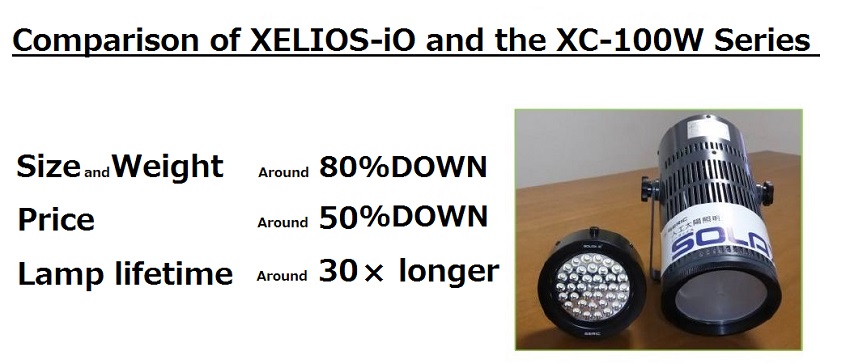
Customers asked for an artificial solar light that could be used at meetings and presentations instead of only in large fixed installations. After two years of development, SERIC created a smaller, lighter, lower-cost portable iO design compared with its earlier XC-type lighting system.
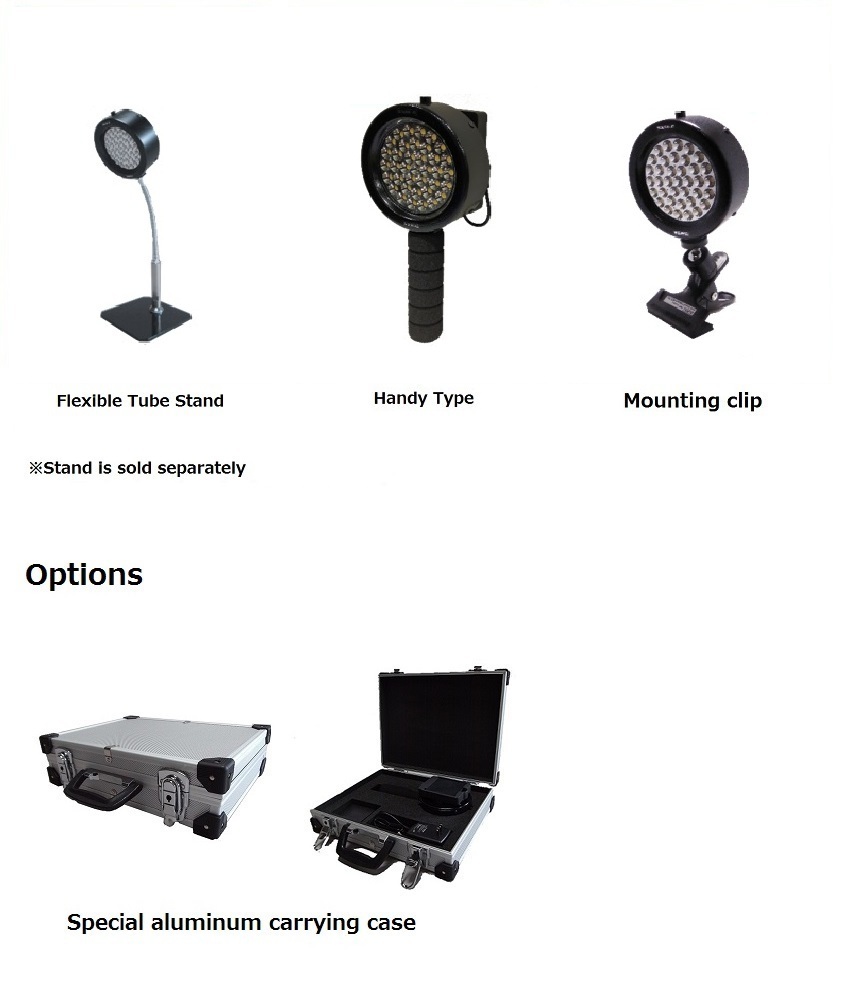
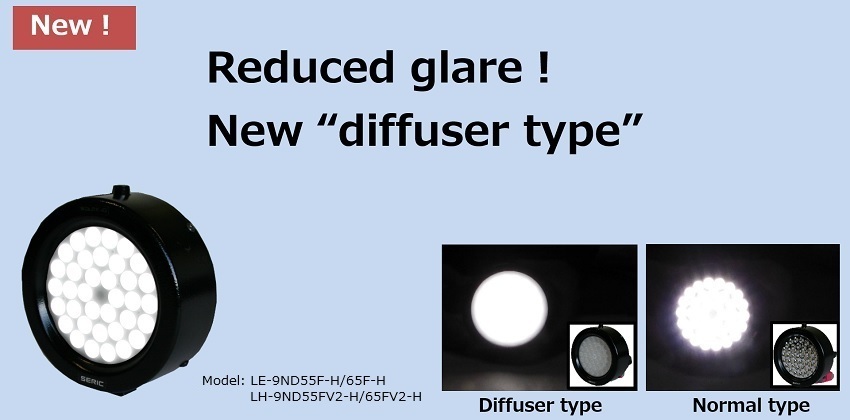
The product illustrations show a flexible stand, mounting clip, hand-held unit, and aluminum carrying case. The diffuser-type illustration compares the illumination patterns of standard and diffuser configurations.
Portable daylight-like lighting helps professionals assess the appearance of products and samples at the places where decisions are made. XELIOS-iO supports color reviews in product design and material selection, apparel manufacturing, photography and visual presentation, cosmetics and nail colors, and customer meetings.


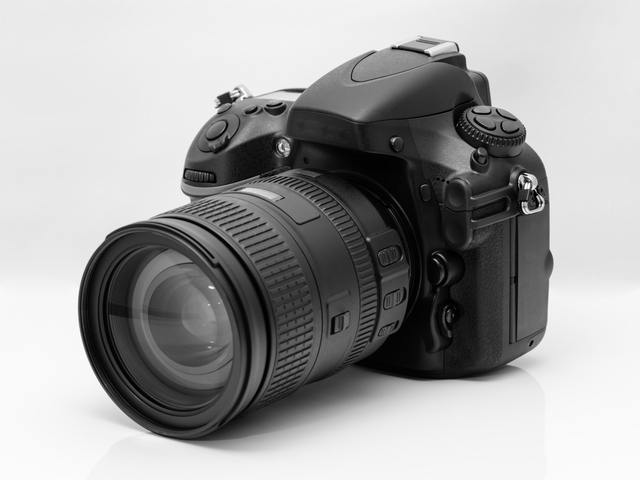
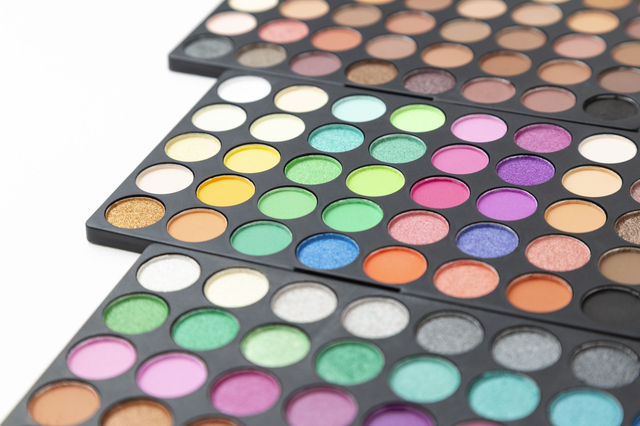

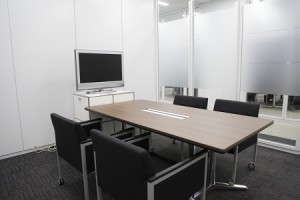
Bring XELIOS-iO into a meeting room, presentation, or customer office to examine colors under a consistent reference light. The cordless hand-held configuration makes it easier to inspect details and internal surfaces that fixed lighting cannot reach.
Teams in different offices or countries can use XELIOS-iO when discussing the appearance of samples. When iO lighting is available at both locations, colleagues can compare colors over the telephone or during a video conference rather than relying only on travel to the site.
By bringing a consistent light source to the places where color decisions are made, XELIOS-iO helps improve the accuracy of product development and sales discussions and strengthens customer confidence. Its portability can reduce development time, travel expenses, and the cost of rework caused by color differences.

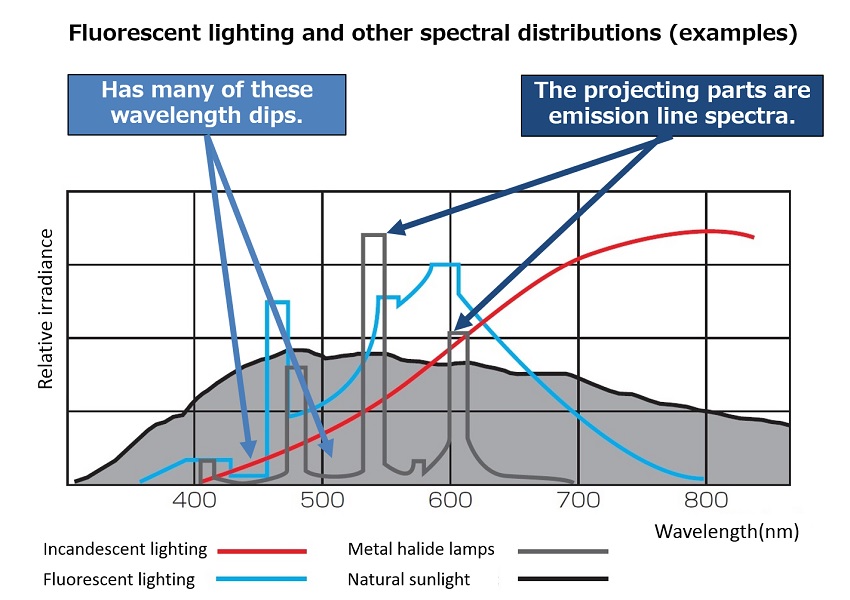
Natural sunlight contains a broad, continuous spectrum. Light sources with gaps or sharp peaks in their spectral output can change the perceived appearance of colors, even when the samples themselves are unchanged. Some fluorescent and metal-halide sources have strong emission lines or gaps, while halogen and incandescent sources differ from sunlight at shorter wavelengths.
SERIC developed artificial solar lighting to reproduce the spectral characteristics of sunlight. XELIOS-iO uses this expertise to deliver a high-quality reference light for color evaluation.
XELIOS-iO is designed to meet these requirements and provide stable artificial sunlight for precise visual color evaluations.
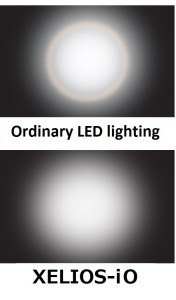
Chromatic aberration occurs when a lens refracts different wavelengths by different amounts, producing color fringing and changes in the perceived colors of an illuminated object. SERIC's XELIOS-iO design does not use a lens and eliminates chromatic aberration, enabling objects to be viewed in their natural colors.
The comparison illustration shows the different light spots produced by an ordinary lens-based LED light source and XELIOS-iO.
XELIOS-iO is available in two color-temperature types: 5500K and 6500K.
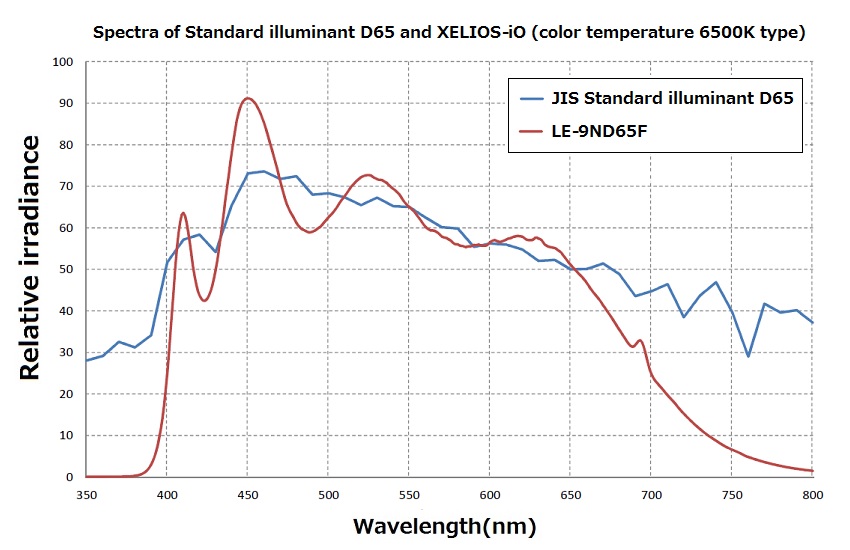
The 5500K type is designed to reproduce sunlight within the approximately 5000–6000K color-temperature range. The 6500K type includes the LE-9ND65 model, which conforms to the D65 standard illuminant specified in JIS Z 8720.
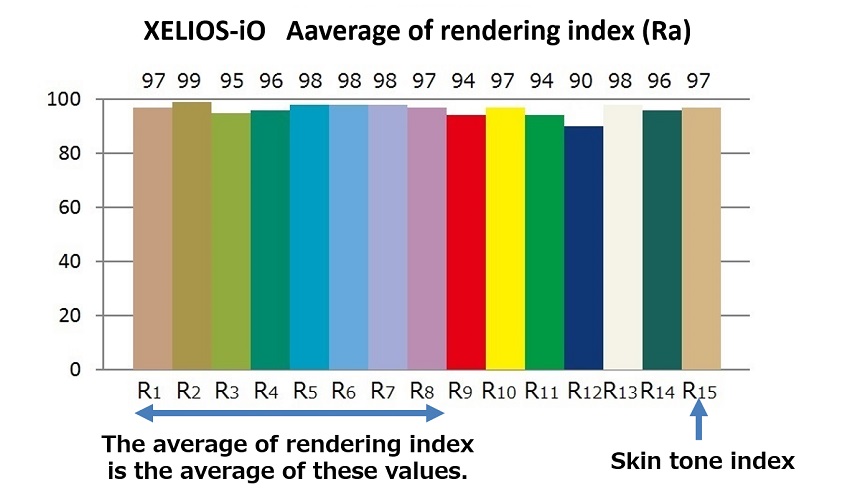
XELIOS-iO offers excellent color-rendering performance, with an average color rendering index (Ra) of approximately 97. LE-type models weigh approximately 450 g, while LH-type models weigh approximately 650 g. Specifications vary by model and region. See the regional model information below for details.
For detailed model codes, power requirements, and available options, see the Asia & U.S. or Europe specifications in the regional model section below.
XELIOS-iO achieves an average color-rendering index (Ra) of 97 or higher, delivering exceptionally high color-rendering performance in a portable artificial solar light. The high rendering performance helps users evaluate the appearance of materials, products, and skin tones with clarity.
XELIOS-iO supports AC 100–240V power sources, making it suitable for work in offices and on overseas business trips. An adapter plug is not included and should be supplied separately as required for the destination.
The rechargeable hand-held configuration provides approximately two hours of light after approximately two hours of charging. XELIOS-iO also includes LE-type and LH-type configurations, and light output may vary slightly between individual units.
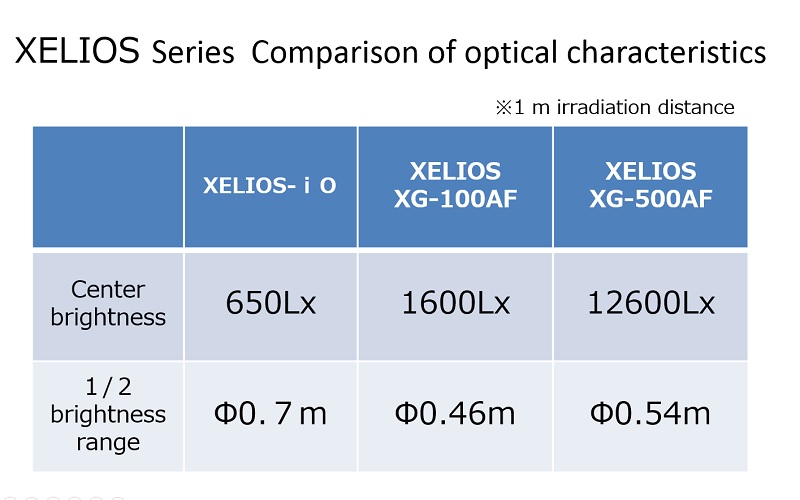
The comparison figures illustrate XELIOS-iO alongside other SERIC lighting systems, covering differences in size, weight, price, lamp life, illuminance, and optical characteristics.
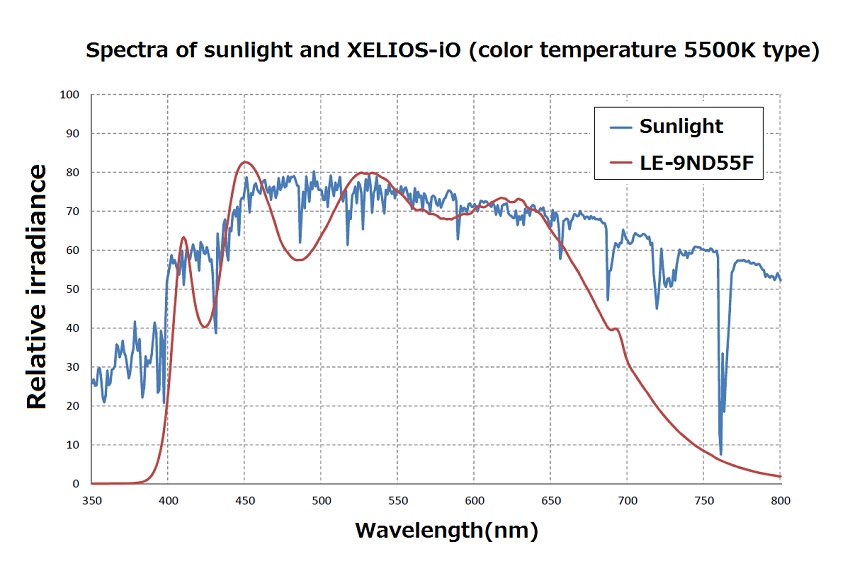
SERIC's artificial solar lighting technology reproduces a spectrum extremely close to natural sunlight. XELIOS-iO's 5500K type is developed to match the color temperature of daylight in the 5000–6000K range. Natural sunlight reaching the ground within approximately two hours before or after noon on a clear day provides an important reference for true color appearance.
The spectral charts compare the 5500K type with sunlight and the 6500K type with a D65 reference.
The general color-rendering index Ra is the average of the color-rendering indices R1 through R8. The indices R9 through R15 describe additional special colors. R15 is especially relevant to the reproduction of Japanese skin tones.
With its Ra of 97 or higher, XELIOS-iO supports accurate color evaluation not only of materials and objects but also of human skin. XELIOS-iO also achieves an R15 value of 97 for skin-tone rendering.
The R1–R15 color-rendering chart shows the individual test-color indices used in color appearance evaluation.
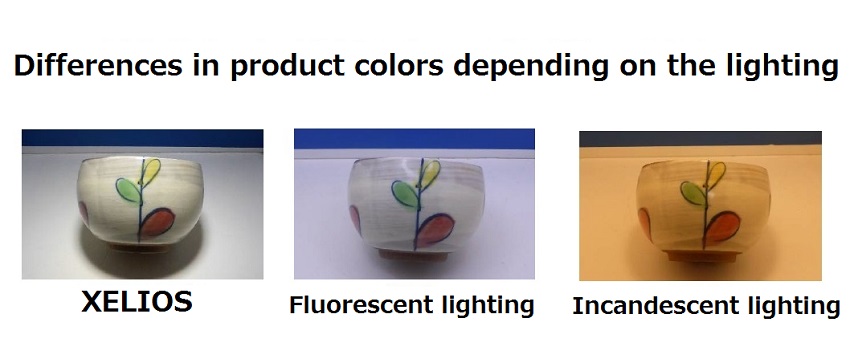
Colors can appear different under XELIOS, fluorescent lighting, and incandescent lighting because their spectral distributions differ. Fluorescent and metal-halide lamps have characteristic dips or emission lines, while incandescent and halogen lighting provide relatively less energy at shorter wavelengths. Artificial solar lighting is designed to bring the spectral distribution closer to that of natural sunlight, supporting fine color comparisons that are difficult under conventional lighting.
The comparison photographs and spectral graphs illustrate how color appearance and wavelength distribution differ between light sources.

What is XELIOS-iO used for?

What color-temperature options are available for XELIOS-iO?

What is the difference between tabletop and hand-held XELIOS-iO?

Where can I find XELIOS-iO specifications for my region?

Do all XELIOS-iO configurations have the same specifications?
For applications requiring greater brightness and performance than portable XELIOS-iO lighting, SERIC offers its XE Series of artificial solar lighting. This broader range supports color evaluation as well as research related to biotechnology and solar energy.
Explore the products below to find an artificial solar lighting system suited to your application.
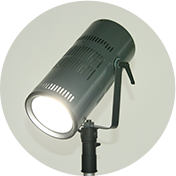
High illuminance LED Artificial Solar Illumination Lamps “XELIOS-NEXT”
Explore a separate LED artificial solar lighting line for applications requiring higher illuminance or a wider illuminated area.
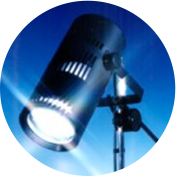
XELIOS 100W Series
A compact artificial sunlight system for color evaluation and testing of smaller objects.
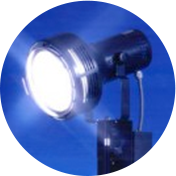
XELIOS 500W Series
A higher-output artificial solar lighting series for color evaluation and a broad range of testing applications.
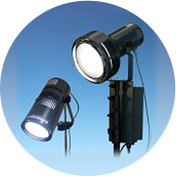
XELIOS XG-Series Super Spotlight
High-intensity configurations are available for either 1 SUN or 100,000 lux requirements.